
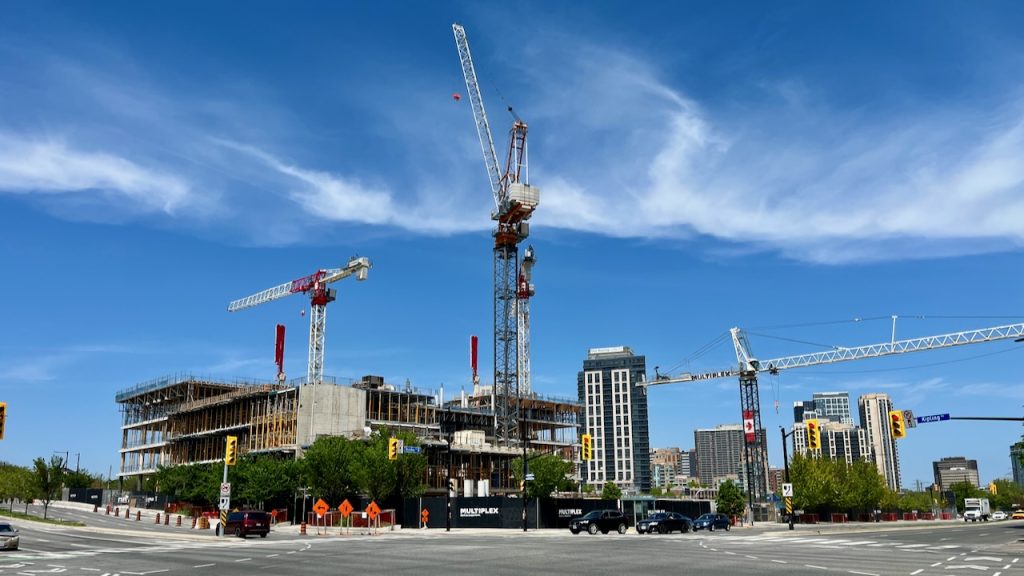
Etobicoke Centre is undergoing one of the most significant urban transformations in Toronto’s west end, as a wave of new construction reshapes the area around the Kipling transit hub. What was once a car-oriented landscape defined by outdated infrastructure is quickly evolving into a dense, transit-focused community with thousands of new dwellings, a modern civic space, and expanded public amenities.
The Vertical Wave: Dundas Street West
At the centre of this growth is the intensification along Dundas Street West, where multiple large-scale residential developments are rising or proposed within a few blocks. One of the most notable projects is The Stella, a development at 5207 Dundas Street West currently underway, which will introduce approximately 725 purpose-built rental homes. In a city facing persistent rental shortages, this project represents a meaningful addition to long-term housing supply, particularly in an area that is becoming increasingly attractive due to its connectivity.
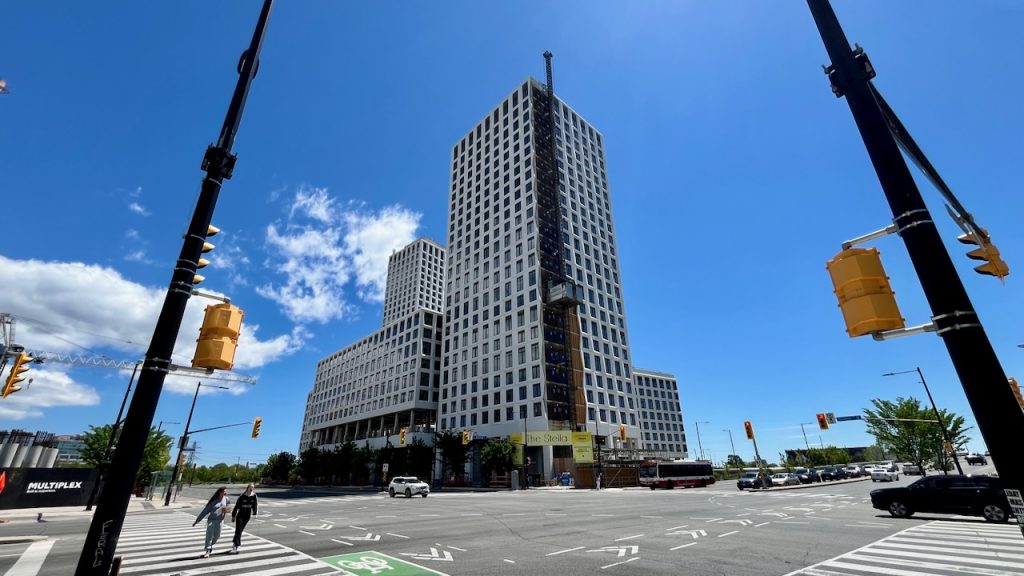
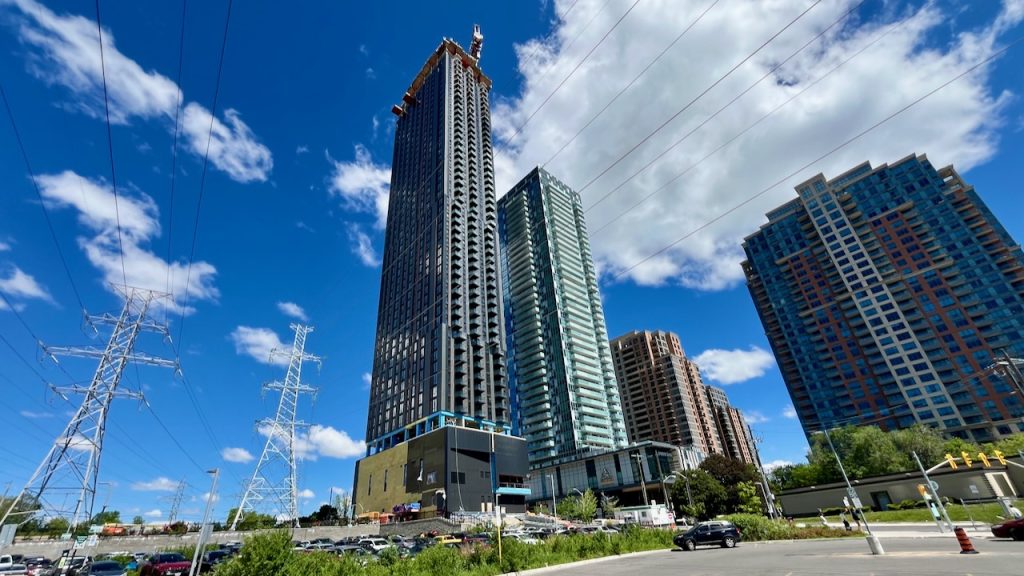
Nearby, Kipling Station Condos at 5251 Dundas Street West is adding further density with a 50-storey residential tower comprising 552 units, designed to capitalize on its proximity to transit. This development is part of a broader trend: building upward around key mobility hubs rather than outward into suburban land. Just steps away, Station Place at 5245–5249 Dundas Street West, a 40-storey rental building completed in 2021, has already set the tone for vertical growth in the area. Future proposals continue to push this trajectory, including a 50-storey tower at 5359 Dundas Street West and a mixed-use project at 5500 Dundas Street West featuring 14 and 16-storey buildings. Together, these developments are poised to bring thousands of new residents into a relatively compact footprint.
More Than Just Condos: Public Infrastructure & The Civic Centre
What makes this transformation particularly impactful is that it is not happening in isolation. It is supported by major public investment in infrastructure and urban design. The reconfiguration of the Six Points interchange — once known locally as the “Spaghetti Junction” — has been a foundational change. The City of Toronto invested hundreds of millions of dollars to dismantle the outdated highway-style interchange and replace it with a more traditional street grid. This not only improved connectivity and safety for pedestrians and cyclists, but also unlocked approximately 18 acres of land for redevelopment. That land is now being integrated into the surrounding community through new streets, buildings, and public spaces.
Read more: Mortgage Rates and the True Monthly Cost of Condo Ownership
One of the most important civic investments in the area is the new Etobicoke Civic Centre, located at 3755 Bloor Street West. Construction began in April 2024, and the project is expected to be completed by late 2028. Once finished, it will serve as a modern hub for municipal services, bringing together administrative offices, a community recreation centre, a public library, and a childcare facility in one centralized location. Beyond its functional role, the civic centre is intended to anchor the community and create a stronger sense of place in a neighbourhood that historically lacked a defined core.
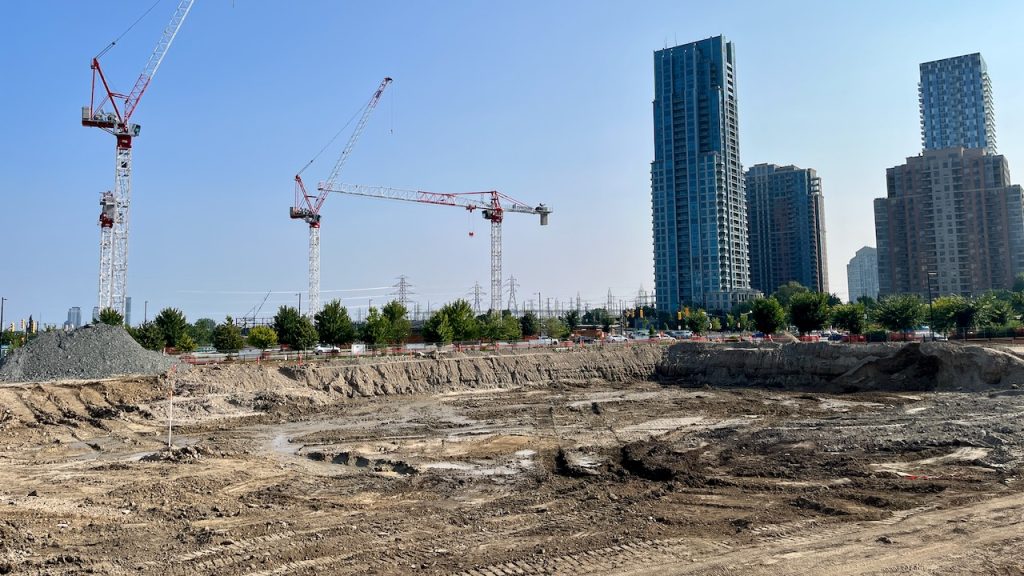
Green space and livability are also key components of the redevelopment strategy. Plans for the area include more than 10,000 square metres of new parkland, highlighted by an expanded Six Points Park. This addition will help balance the influx of residential density with accessible outdoor space, contributing to a more complete and livable urban environment.
Perhaps most forward-looking is the ambition to create what planners envision as Toronto’s first net-zero community within the Bloor-Kipling area. By incorporating a district energy system, new developments aim to significantly reduce greenhouse gas emissions, and improve energy efficiency at scale. This approach reflects a broader shift toward sustainable city-building, where environmental considerations are integrated into the planning process from the outset.
All of these changes are anchored by the area’s role as a major transit mobility hub. With direct access to the Kipling subway station, GO Transit, and multiple bus routes, the neighbourhood is uniquely positioned to support high-density, transit-oriented development. As more residents move into the area, reliance on cars is expected to decrease, reinforcing the shift toward a more sustainable and connected urban model.
The Buyer’s Reality: Density, Micro-Units, and Logistics
These developments are not without criticism, and some of the concerns raised by residents are legitimate. Much of the debate centres on the concentration of high-density projects within a relatively small area, as well as questions surrounding parking availability and shrinking unit sizes. Kipling Station Condos, for example, is being constructed near existing hydro infrastructure and offers studio suites as small as 343 square feet, with some one-bedroom units measuring well under 500 square feet. As discussed in a previous article, How Much Have Condo Prices Really Dropped?, provincial and municipal housing policies have increasingly encouraged smaller unit formats, making micro-units a growing feature of Toronto’s condominium market. Additional proposals south of Thomas Riley Road would place new residential buildings only a short distance from active subway tracks, further fueling debate about livability and long-term planning.
Residents have also expressed frustration with the pace of public projects. The new Etobicoke Civic Centre, for instance, is not expected to be completed until 2028 despite construction beginning in 2024. While some view this timeline as excessively long and worry about potential delays, the broader reality is that the area is finally seeing meaningful progress after years of planning and discussion. Bureaucratic hurdles and political indecision may have slowed redevelopment, but significant housing, infrastructure, and community investments are now moving forward.
A Community in Transition: Looking Ahead
In just a few years, Etobicoke Centre has begun its transition from an underutilized and fragmented landscape into one of Toronto’s most dynamic growth centres, but the transformation is far from complete. Construction remains widespread, with cranes, active sites, and phased developments still shaping nearly every corner of the Kipling area. What exists today is only a glimpse of what’s to come. Over the next several years, as major projects are completed and new ones break ground, the neighbourhood will continue to evolve at a rapid pace, ultimately becoming almost unrecognizable from its former state. With a combination of residential intensification, civic investment, improved infrastructure, and forward-thinking sustainability initiatives, the transformation around Kipling Station is not just about adding buildings; it is about building a complete community for the future.
Looking to buy, sell, or invest in the GTA? Contact me for expert real estate guidance and local market insights.